
It doesn't work without salt.
Salt is an essential component in food production.
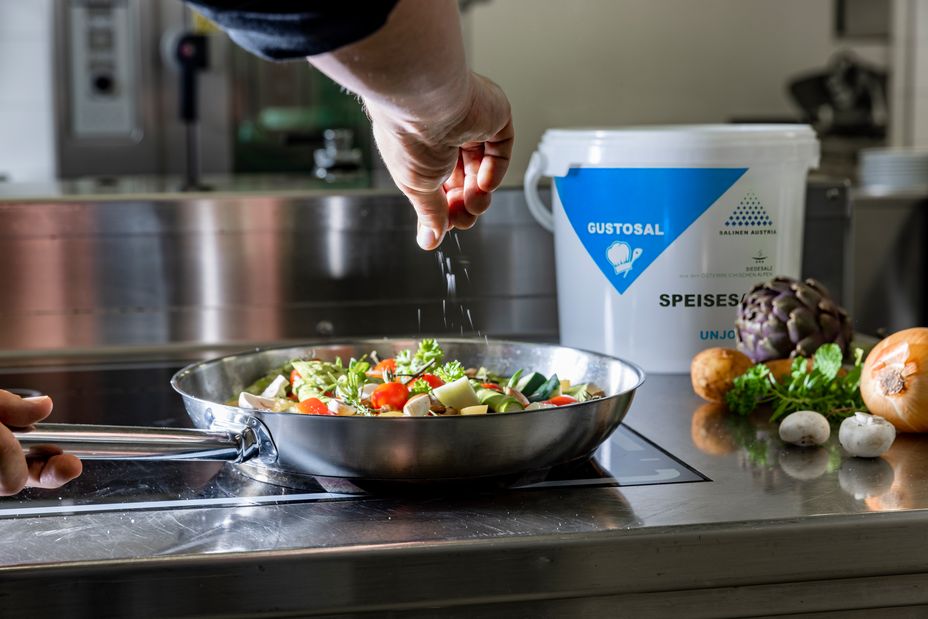
More than a flavour carrier
Salt is an essential flavour carrier in our food. Beyond that, it also performs important functions in food production – for example when it comes to shelf life and texture. Leaving it out affects how firm or light the end product is and how it feels. Salt influences the entire processing chain – and is irreplaceable.
 Preserving: the original function of salt
In the production of meat and sausage products, cheese and preserves, salt performs one of its oldest tasks: it preserves foods that would otherwise spoil very quickly. Humans have been making use of this function since 3000 BC.
Salting: Salt draws moisture out of meat or fish – and with it the basis of life for harmful microorganisms.
Fermenting: When pickling vegetables, the brine ensures the necessary exclusion of air and optimal lactic acid fermentation. The acidic environment prevents harmful microorganisms from forming and therefore prevents rot and mould.
Curing: Here, meat is treated with a combination of salt and nitrite. In Europe, around 80–90% of all processed meat and sausage products are cured.
 Salt influences flavour and texture
Salt interacts with proteins, which contributes significantly to the sliceability of sausage and the lightness of bread dough. This effect is also used in cheese production and in the production of pickled vegetables: because salt stimulates osmosis, cell fluid escapes – changing both flavour and texture. Conversely, texture is also affected because salt binds water.
 Whether in everyday cooking at home or in a large bakery: salt is an irreplaceable flavour carrier and a completely natural flavour enhancer. It's all about the right amount: from robust seasoning to rounding off the flavour with the tiniest pinch in sweet dishes.