
Curing to survive
Salt mining and meat preservation in Hallstatt
We are curing experts. For 7,000 years
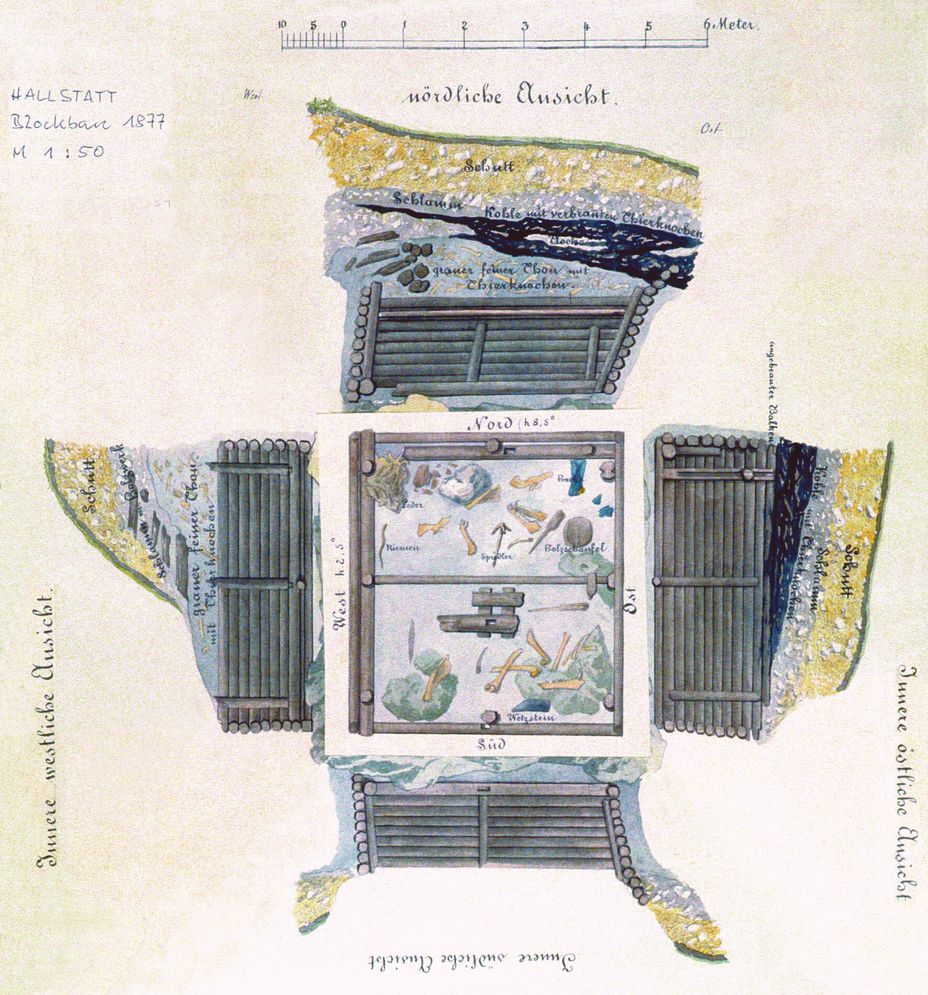
As early as the Bronze Age (approx. 2000 to 800 BC), a meat industry was operating in the high valley of the Hallstatt salt mountain: archaeological finds show that selected cuts from pigs aged one to two years were processed into bacon and ham – and in large quantities: 150–200 pieces of meat at a time were laid in salt in curing troughs and log-built basins and then presumably stored to mature in the ideal climate of the tunnels. A sketch of the curing basin in the title image (curing basin watercolour © NHM Wien Fundaktenarchiv PA) illustrates how the curing basins were built. There is also a replica in the archaeological open-air museum in the high valley (curing basin reconstruction © NHM Wien A.W.Rausch).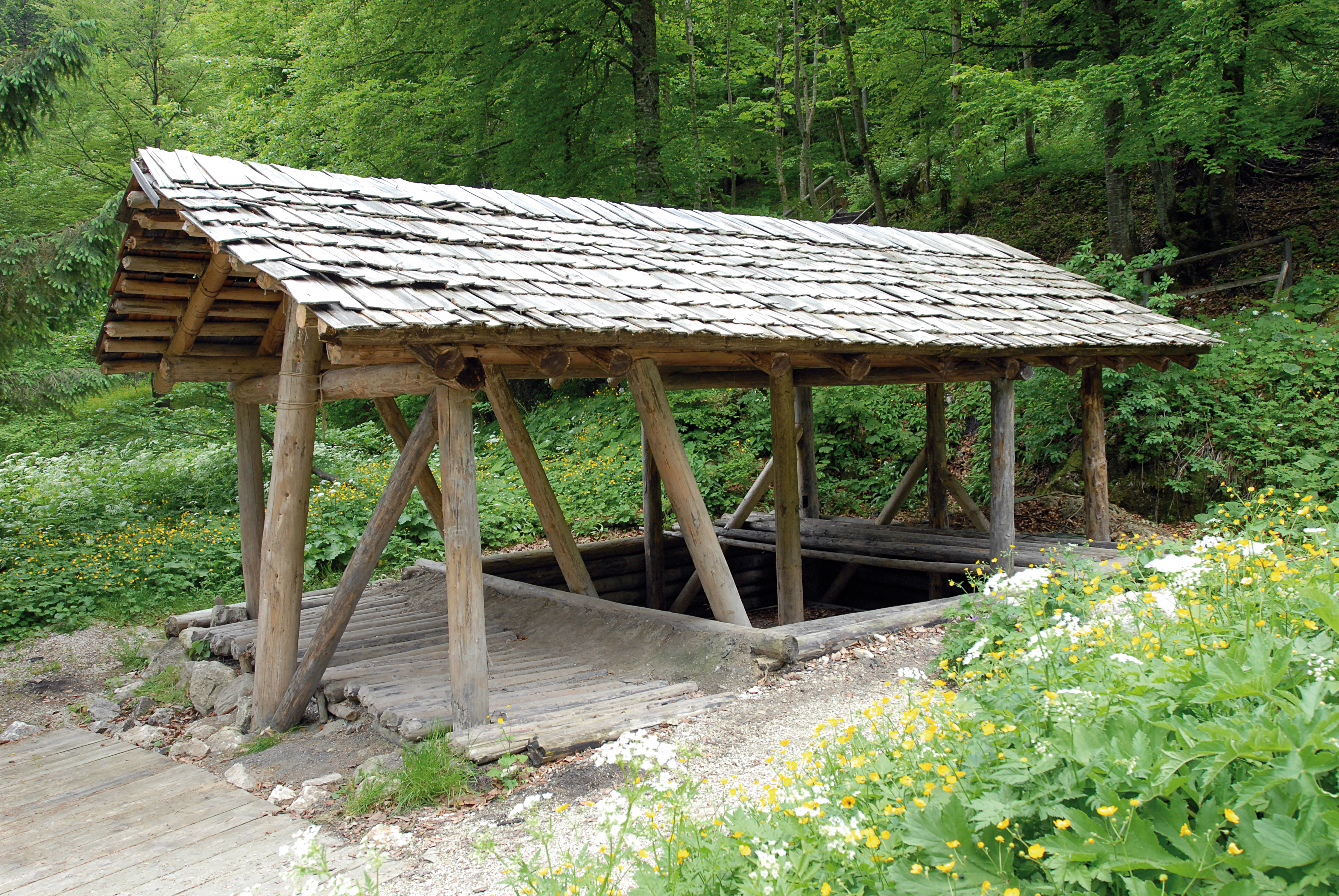 Today, eight historical curing troughs and basins are known. The salt needed for curing came from the local mine. Rather than the high-quality, pure rock salt, a salt mixture containing clay and anhydrite was used. Experiments have shown that this allowed the meat to be salted all the way through within just ten days, so that it kept for a long time.
What is astonishing is not only the quality standards for the meat – bone finds prove the use of cuts suitable for ham and bacon – but also the apparently very well-organised and highly specialised production of cured meat, which went far beyond household needs: the pigs were probably slaughtered at a completely different location, brought to the high valley, processed there and finally traded beyond the region as ham and bacon.
Ideal maturing conditions in the mine
Thanks to the salt-saturated, smoke-laden air, an average temperature of 7 degrees Celsius and around 60% humidity, the salt tunnels offered the ideal microclimate for further refining and maturing the raw ham. The salt-clay-anhydrite mixture gave it a strong flavour without the addition of any other spices.