Resources
Efficient use of energy and water – with recovery and closed cycles
Salt production without major interventions in the landscape: not a coincidence, but a design principle. The brine is dissolved deep in the mountain, piped to Ebensee through closed pipelines, and crystallized into salt by means of thermo-compression in an energy-efficient manner. The result: salt with up to 99.9% NaCl and production that largely cycles energy, water, and raw materials.
Energy recovery in the production process
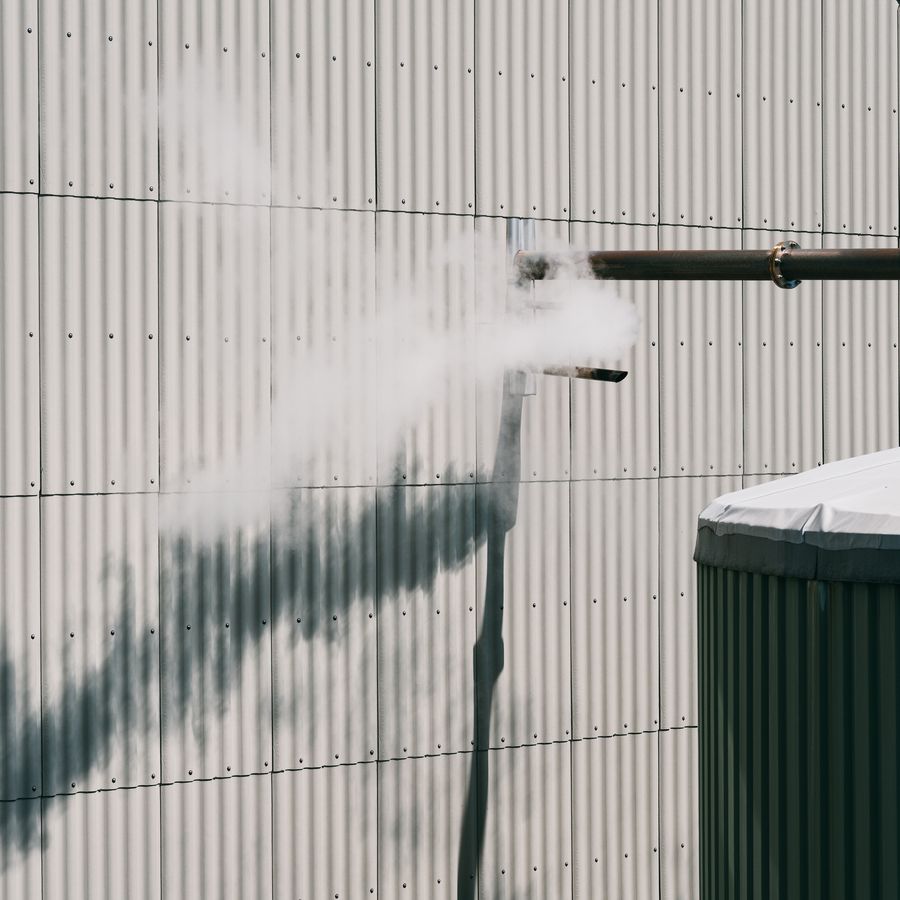
Where wood-fired salt pans once consumed enormous amounts of firewood, Saline Ebensee today relies on consistent energy recovery: The steam generated when the brine evaporates is mechanically compressed and fed directly back into the process as a heat source.
Supplemented by a multi-stage vacuum evaporator, where the brine boils at lower temperatures under vacuum, the energy requirement per ton of salt today is a fraction of historical values. Energy generated in the process remains in the cycle.
Closed water cycles
The water needed to dissolve the salt from the rock is captured spring water from the Salzkammergut. Of the approximately 9.6 million cubic meters pumped into the salt deposits annually, around 3.3 million cubic meters remain as brine in the mountain. The water binds with the salt and exits the system as a raw material. The rest returns to the natural cycle.
Several wells are available for production at Saline Ebensee, fed from the Offensee. Water for heat recovery in the thermo-compression process (around 30,000 cubic meters per year) is also cycled.
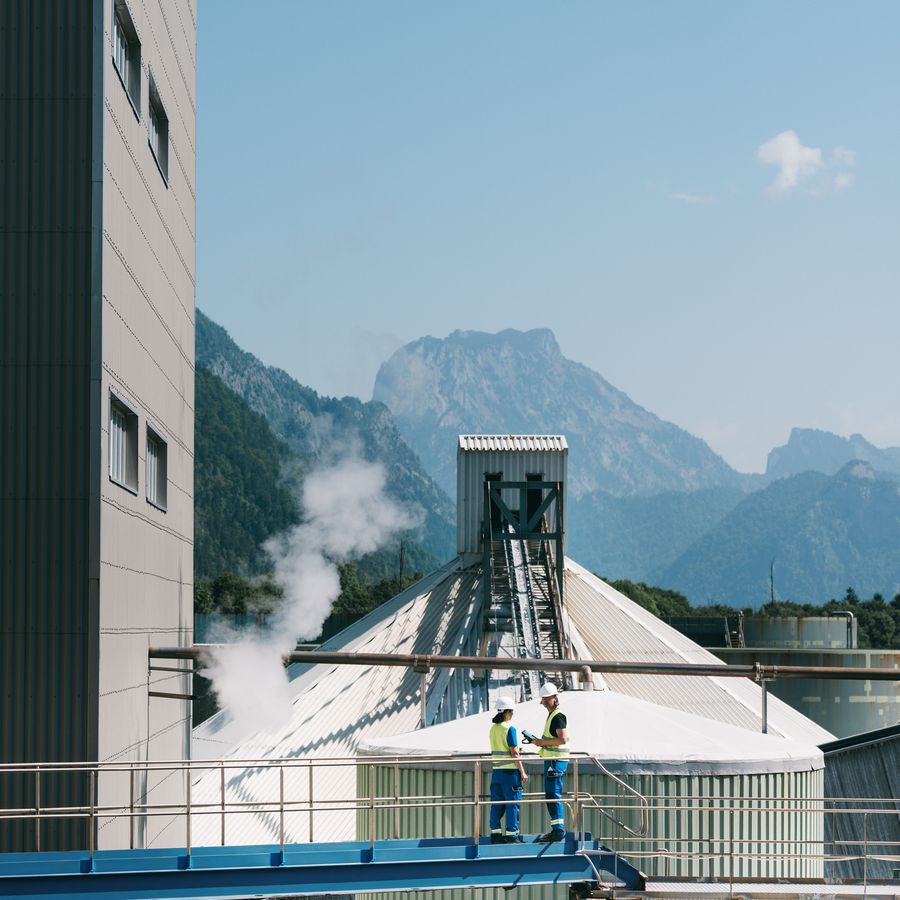
Recyclable materials are valuable
A sludge that removes magnesium and calcium from the raw brine is produced from the brine purification (Schweizerhalle process). This sludge is re-injected into the mountain. What cannot be further utilized returns to where the raw material came from.
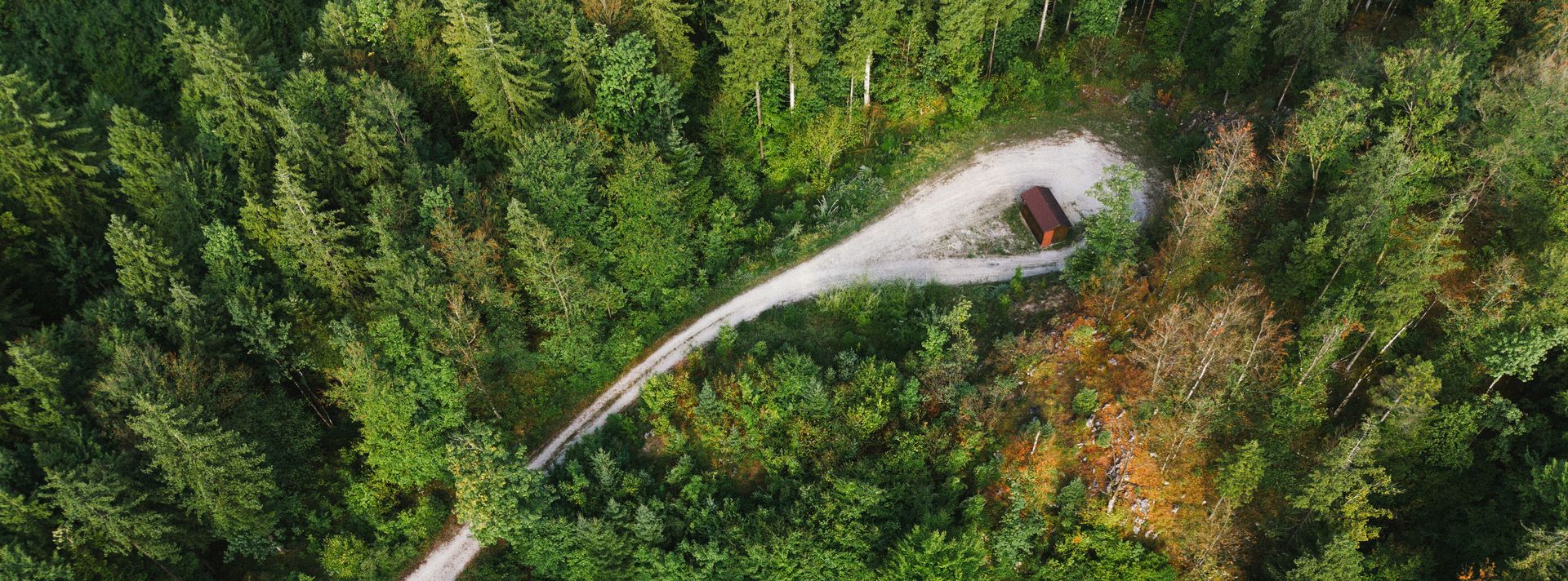
The underground operation itself leaves no visible interventions on the surface. No spoil heaps, no overburden. Each cavern is monitored for stability using sonar.
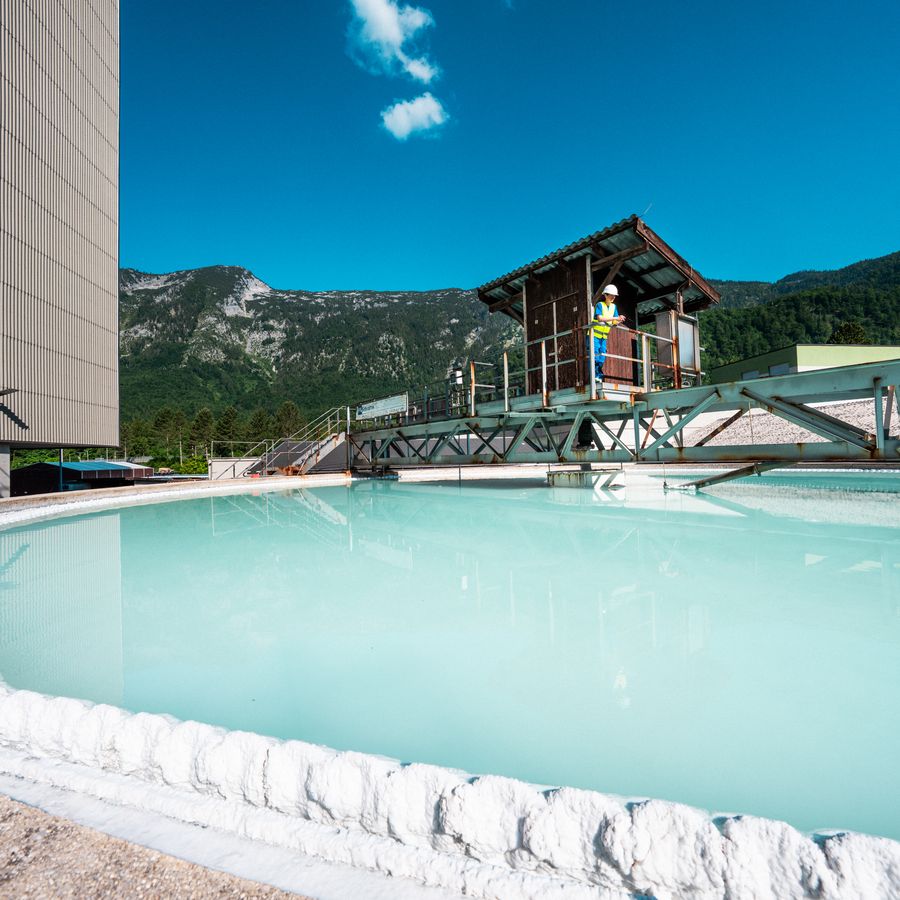
Water protection and ecological responsibility
The residual water from the production process is discharged into the Traun. The salt content is below regulatory limits. Discharge quantities and qualities are continuously measured and documented. Salinen Austria is certified according to ISO 9001 and ISO 14001. Environmental management is thus not a commitment, but a verifiable standard.