Production
How raw brine from the Haselgebirge becomes evaporated salt with up to 99.9 % NaCl in three process steps
Process Steps
The salt arrives as raw brine through a pipeline of around 40 kilometres from the three deposits in Hallstatt, Bad Ischl and Altaussee to the saltworks in Ebensee. Here, three fully automated process steps follow: purification of the raw brine, crystallisation of the salt by evaporating water, and drying. They are certified to ISO 9001, and additionally to GMP for pharmaceutical salt. The result is evaporated salt with up to 99.9 % NaCl and, for pharmaceutical applications, high-purity pharmaceutical salt obtained by fractional crystallisation.
From brine to salt
In addition to sodium chloride (NaCl), the raw brine from the extraction sites also contains magnesium, calcium and other minerals. These must be removed before evaporation so that the end product meets the required specifications. The process runs in three defined steps: purification, crystallisation, drying.
Step 1
Purification using the Schweizerhalle process
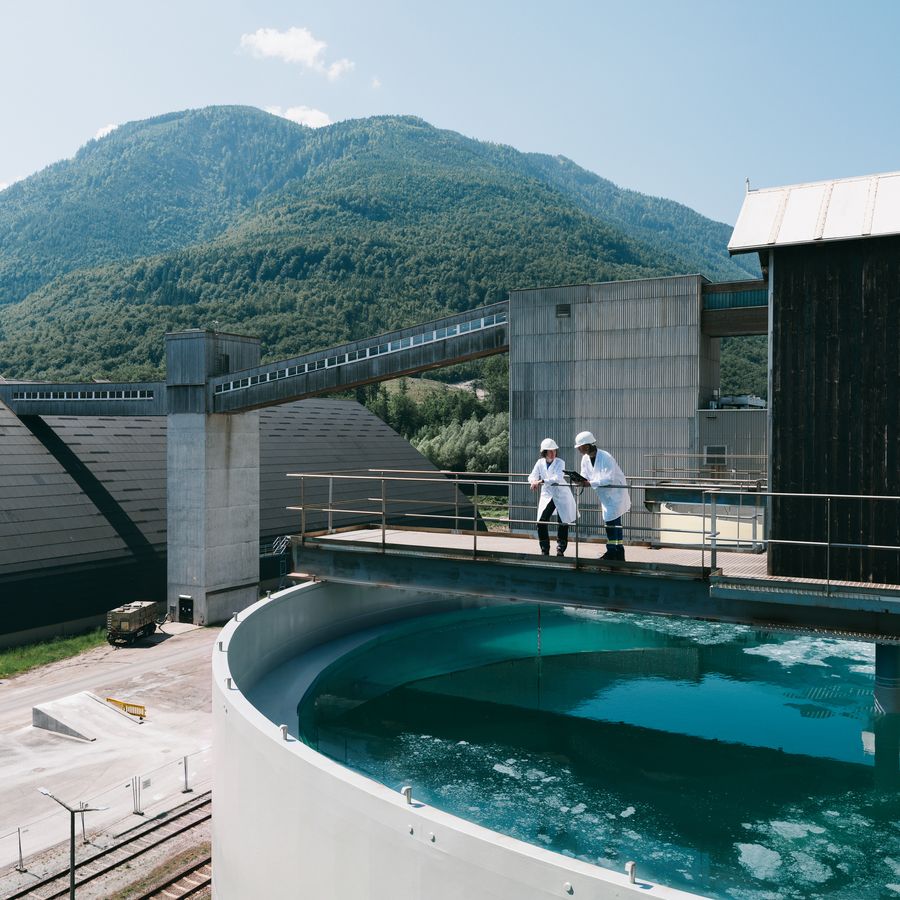
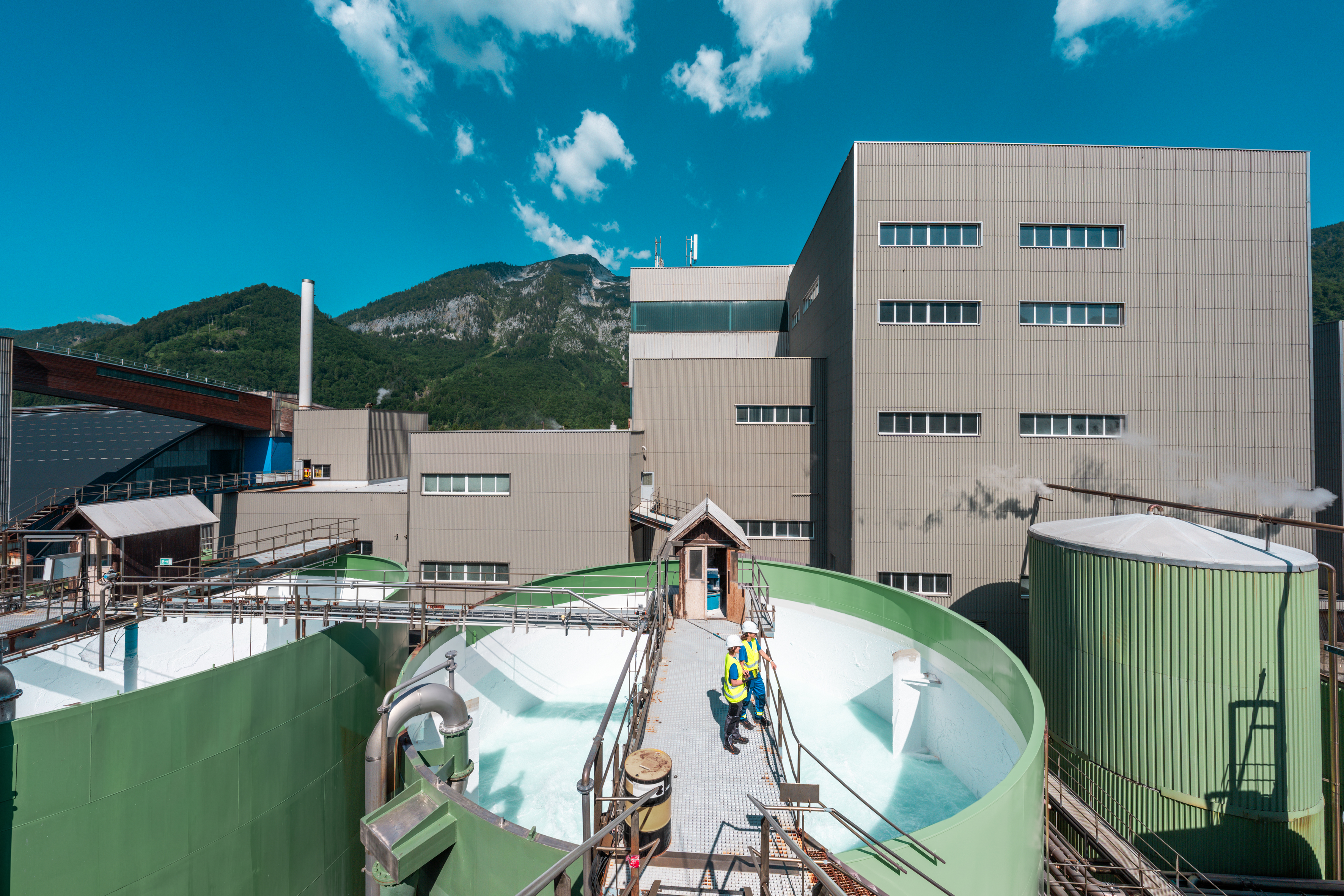
In a two-stage process based on the Schweizerhalle method, the brine is stripped of hardness-causing substances such as magnesium and calcium by adding lime milk and soda. This is necessary not only to prevent scaling in the brine preheaters and evaporators, but also to meet the required purity criteria for evaporated salt.
Here’s how it works:
The addition of lime milk causes magnesium hydroxide and calcium sulphate dihydrate (gypsum) to precipitate. The solids settle, are pumped off, concentrated and dewatered. They are then transported back to the Altaussee salt mine, where they are used to backfill disused caverns.
The semi-pure brine from step 1 is pumped into the designated tanks. The addition of soda and flue gas from steam generation causes calcium carbonate (fine limestone) to precipitate. The calcium carbonate is filtered, dewatered and transported, together with the solids from step 1, to the Altaussee salt mine.
The purified brine obtained in this way, containing less than 3.5 mg/kg of calcium and free from magnesium, is stored in tanks and is available for crystallisation in the crystallisers. The purified brine tank feeds the treated brine in a controlled manner to the evaporation plant. The Schweizerhalle process has been the industry standard since the 1920s and has been in use in Ebensee since 1951.
Step 2
Crystallisation and vacuum system
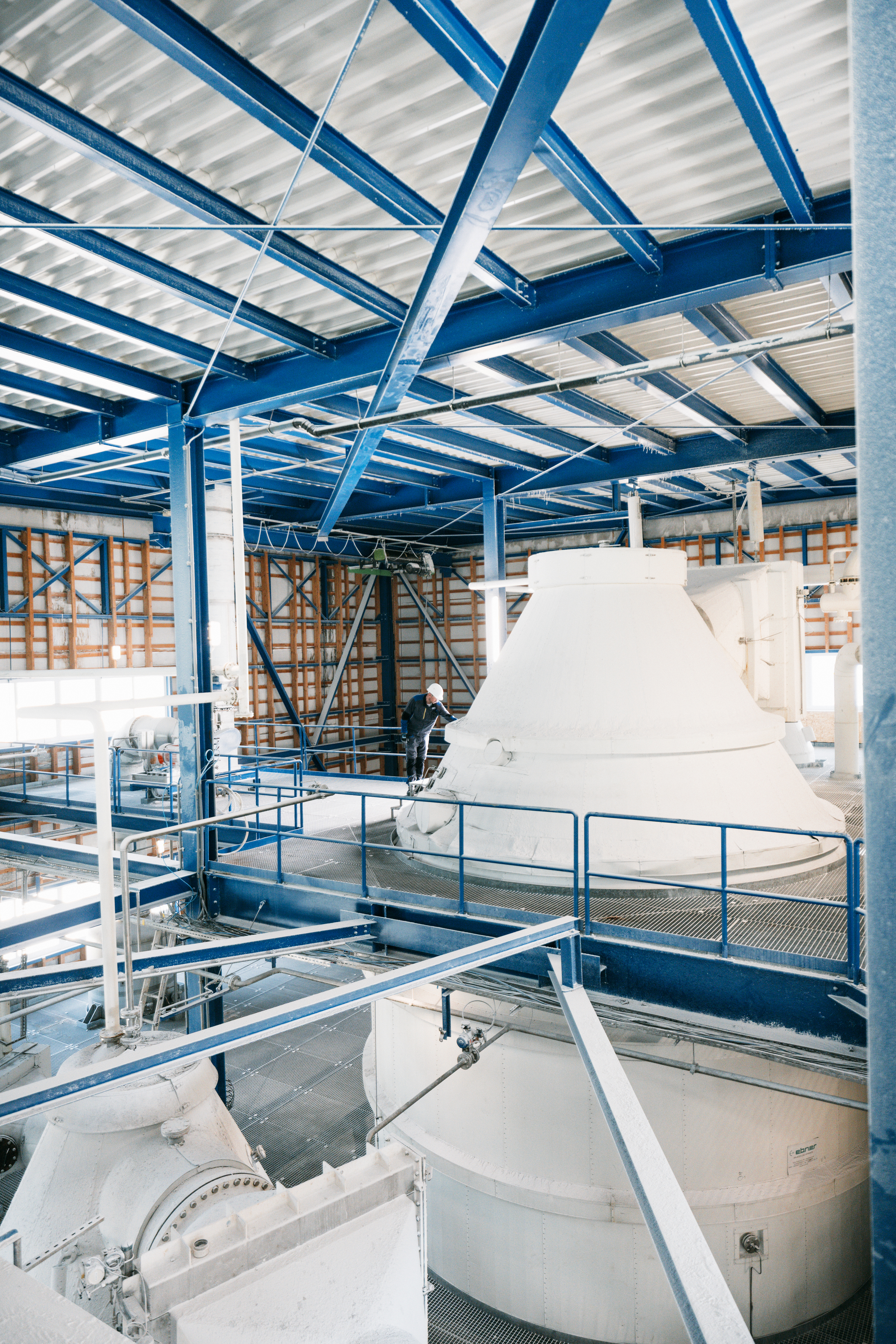
The purified brine is preheated to over 120 degrees Celsius in heat exchangers before being heated to boiling point in the heating chamber. The highly supersaturated brine enters one of nine crystallisers, where the salt crystallises as the water evaporates. Once the salt crystals are large enough, they are removed from the evaporator. Crystals that are still too small are returned to the evaporator via the recirculation pipe, where they can continue to grow.
The water vapour produced when the brine boils is washed to remove salt, compressed in a compressor and heated in the process. The saturated vapour is used to heat the heating chamber. The hot water draining from the heating chamber is used to preheat the brine: a cycle in which the energy input is utilised efficiently.
The remaining brine then passes through a multi-stage vacuum system. Under vacuum, the brine boils at lower temperatures, causing further salt to crystallise out. The combination of both processes maximises yield and energy efficiency. Around 145 tonnes of evaporated salt are produced per hour in Ebensee, which amounts to approximately 3,500 tonnes per day.
 Step 3
Drying and Finalisation
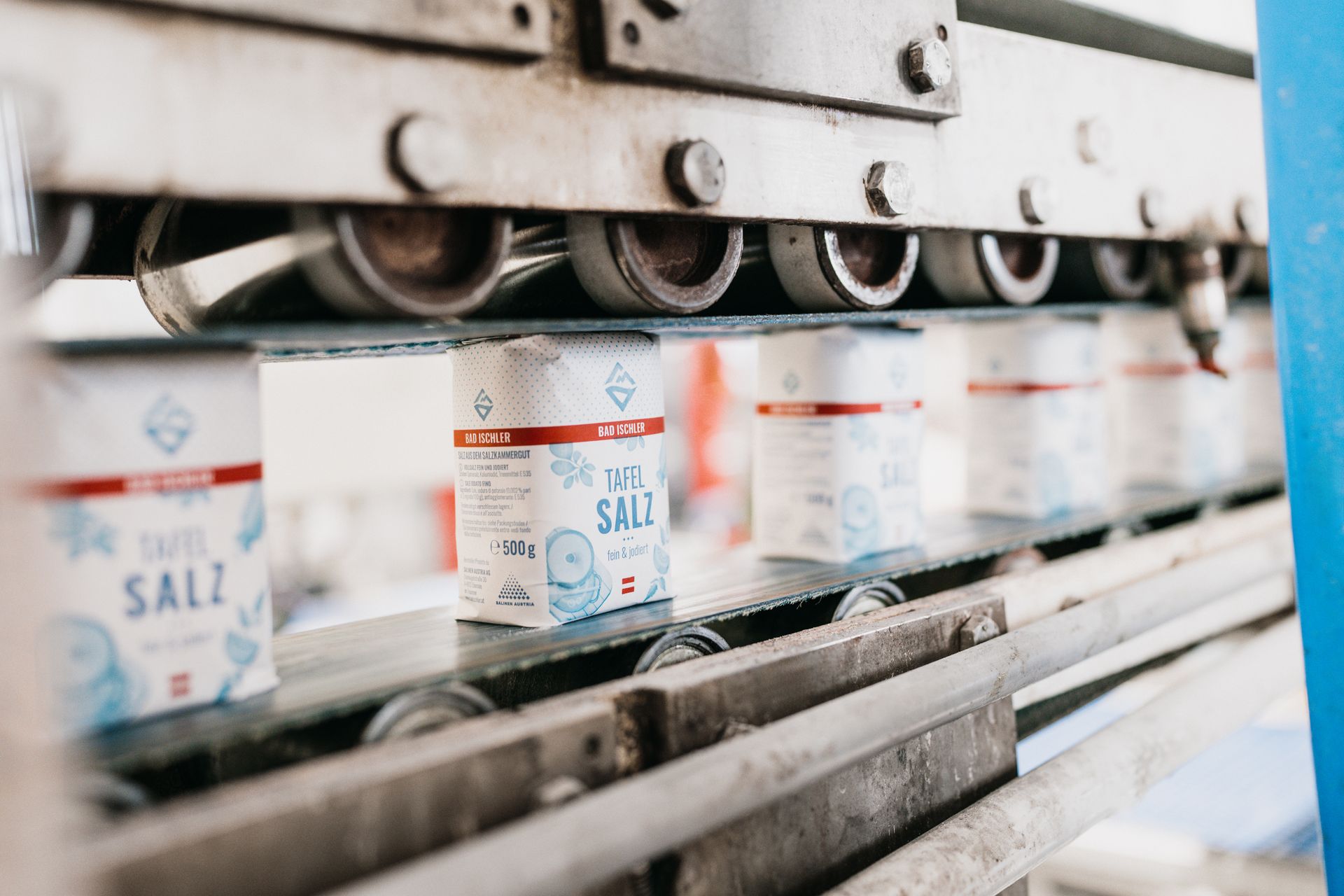
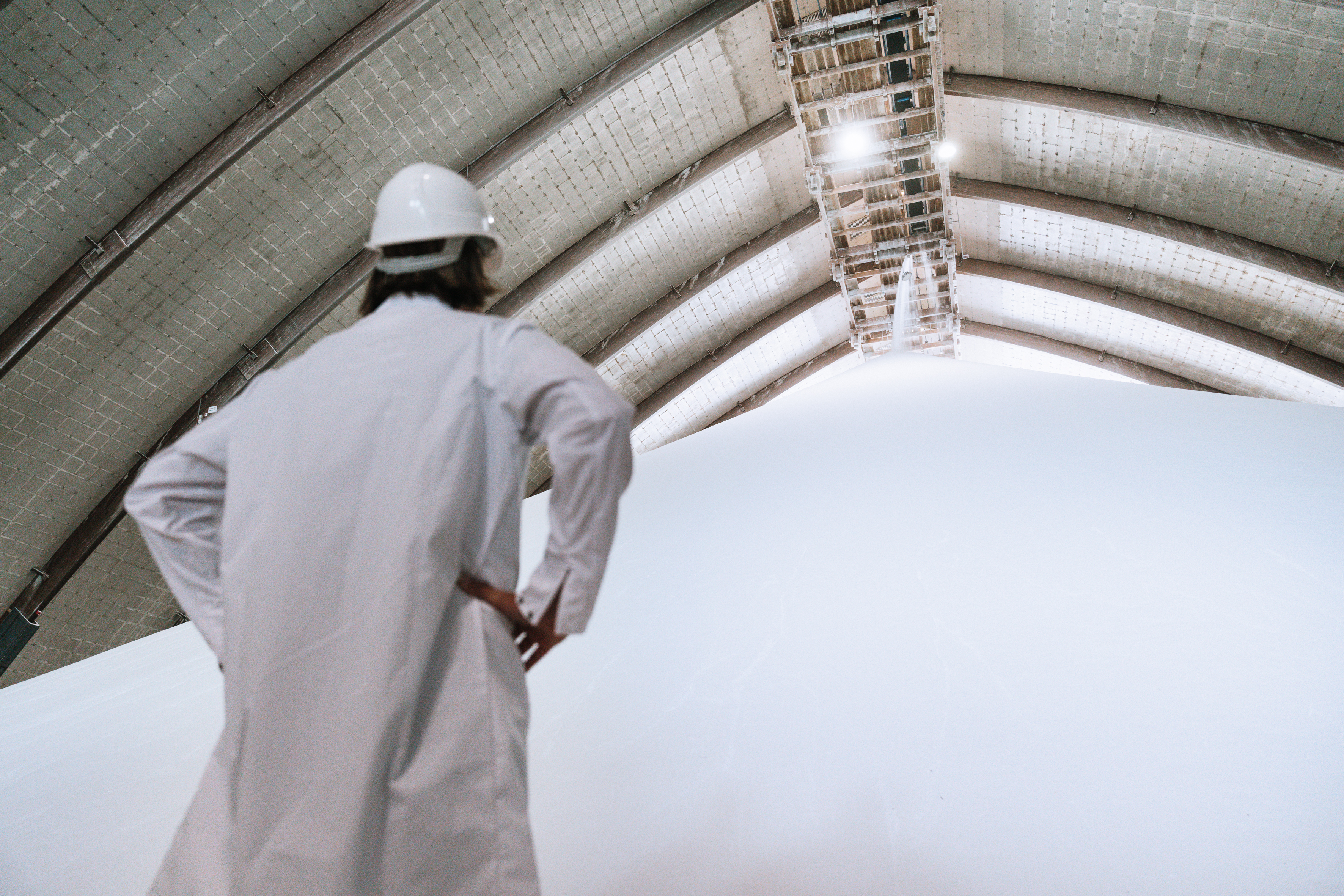
The moist salt is spun in a centrifuge until its moisture content is reduced to around 2 per cent. This moist salt is already a finished product and can be sold as industrial salt or road-gritting salt. However, some products still need to be dried: Table salt and pharmaceutical-grade salt are further dried in a fluidised-bed dryer and, depending on requirements, have additives incorporated (e.g. iodine, fluoride, anti-caking agents).
Each batch is analytically tested prior to dispatch. Certificates of analysis are provided as standard; GMP- and IFS-compliant batch traceability is ensured.