Mining
7,000 years of mining tradition. The foundation of every product specification.
Mining
The raw material for the salt comes from the alpine salt deposits of the Salzkammergut, a geologically complex formation. Due to the folding of the Alps, salt and rock layers are intricately intertwined. The fact that batch profiles nevertheless remain stable is down to the controlled extraction and crystallisation process: The salt is dissolved from the rock with water and the brine obtained in this way is crystallized into evaporated salt in Ebensee. Dealing with a complex geology is one of our core competencies. Long-term secured extraction rights and the traceability of each batch back to the brine are the basis of every delivery.
Deposit and Geology
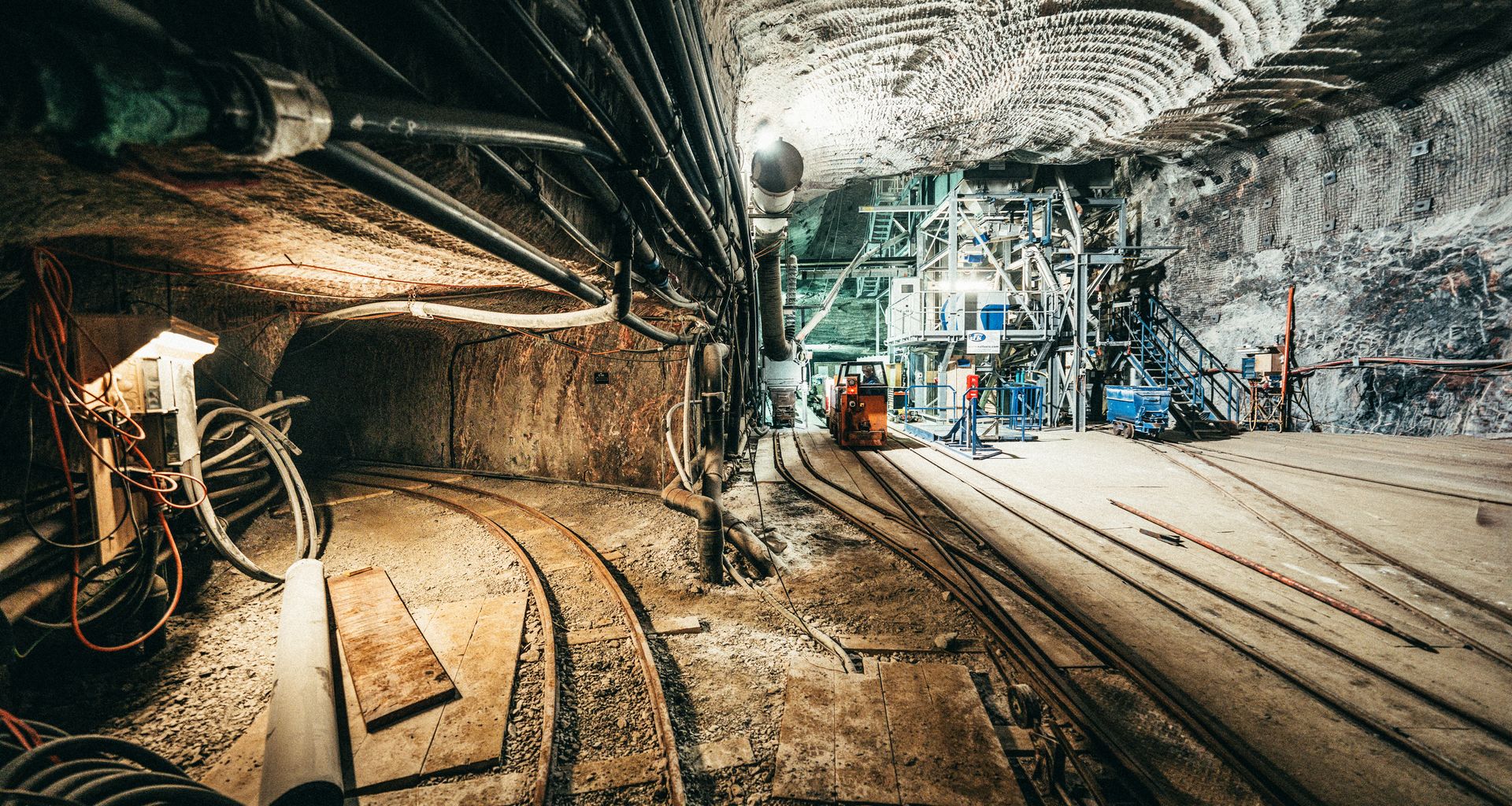
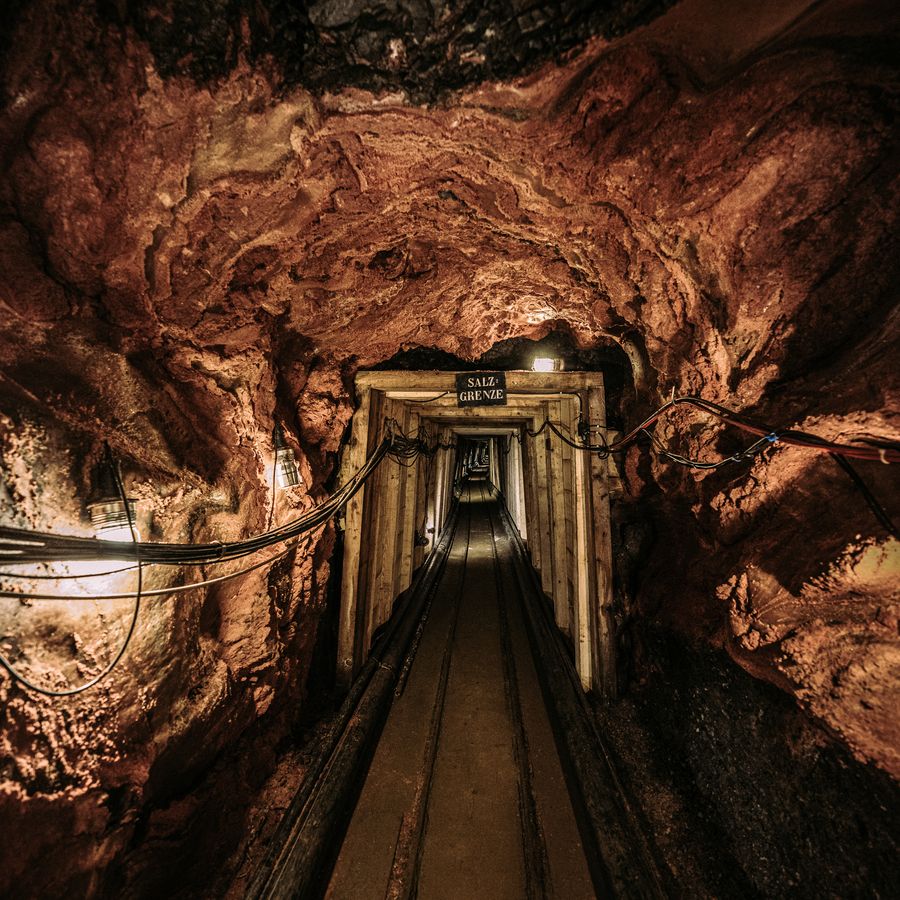
About 250 million years ago, the ancient Tethys Sea stretched over today’s Salzkammergut. With the formation of the Alps, the salt layers were pressed deep into the rock, forming what is now the Haselgebirge, a salt rock with 20 to 70% salt content, in some places up to 98%. The salt has retained the quality of the ancient sea: free from harmful environmental influences, protected in the rock for millions of years.
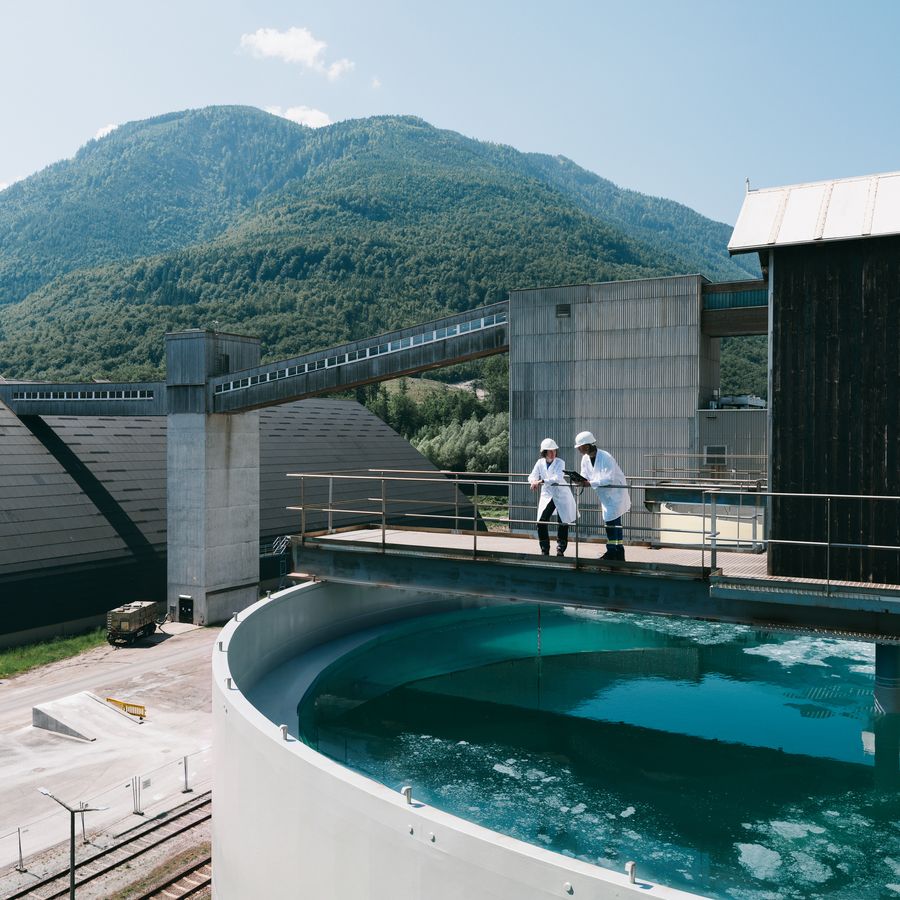
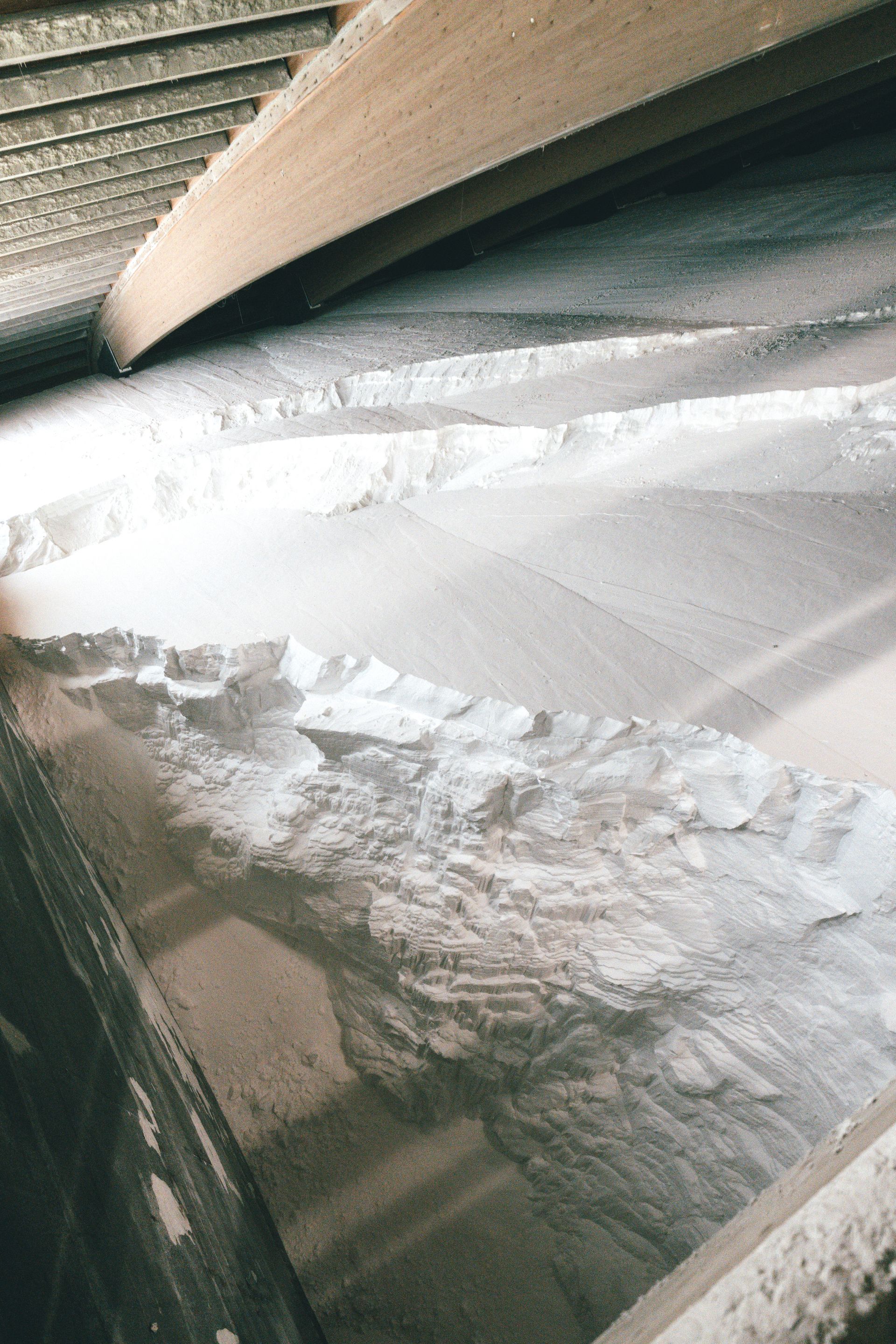
Unlike diapir or seam deposits, the salt here is not extracted dry but dissolved from the rock in a wet process using pure water. The saturated brine is processed at the Ebensee saltworks into highly pure evaporated salt with up to 99.9% NaCl content through crystallization.
Extraction Method, Capacity, and Process Stability
Since 1971, Salinen Austria has employed the borehole probe method: Water is pumped up to 800 meters deep, dissolves salt from the Haselgebirge, and emerges as saturated brine. The annual production is around 1.2 million tons of evaporated salt; for this, about 4 million m³ of brine are piped to the saltworks in Ebensee. Each cavern is monitored for stability using sonar, and the lifespan of a borehole probe is up to 60 years.
The locally varying geology and the lower salt contents compared to other deposits make extraction technically demanding. Therefore, we are among the world's leading enterprises in borehole probe technology.
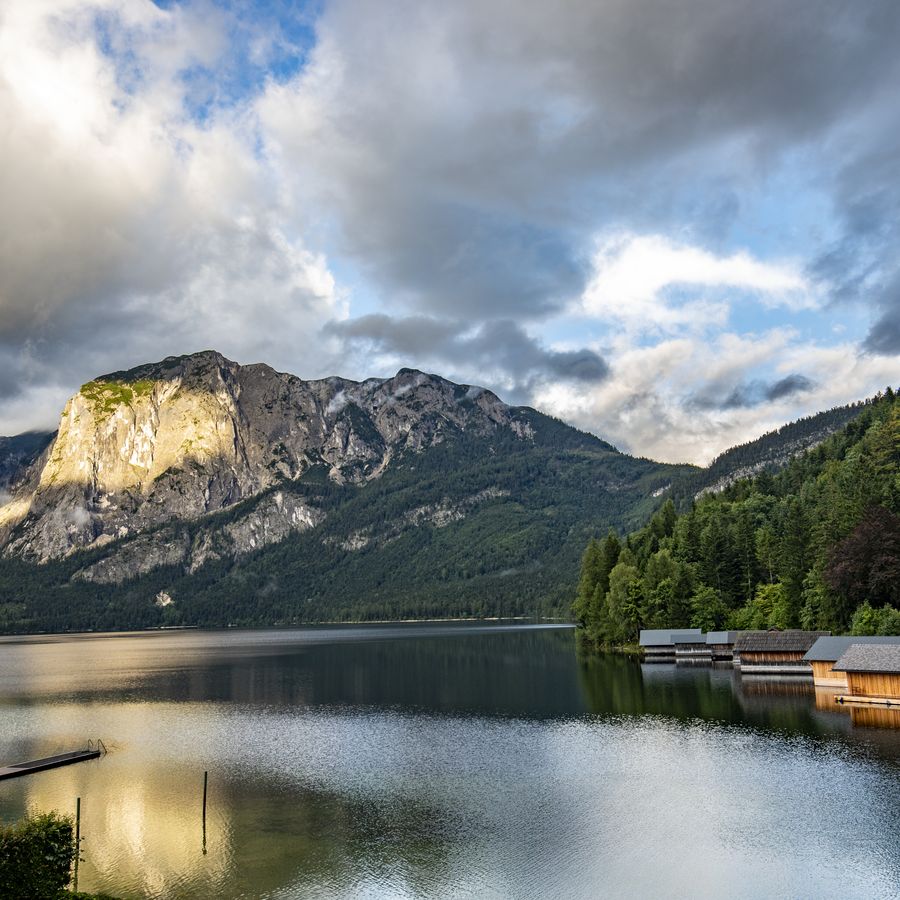
The three mining sites in Hallstatt, Bad Ischl, and Altaussee are operated independently of each other and transported via their own pipelines to Ebensee. These three locations create redundancy: The brine supply is not dependent on a single extraction site.
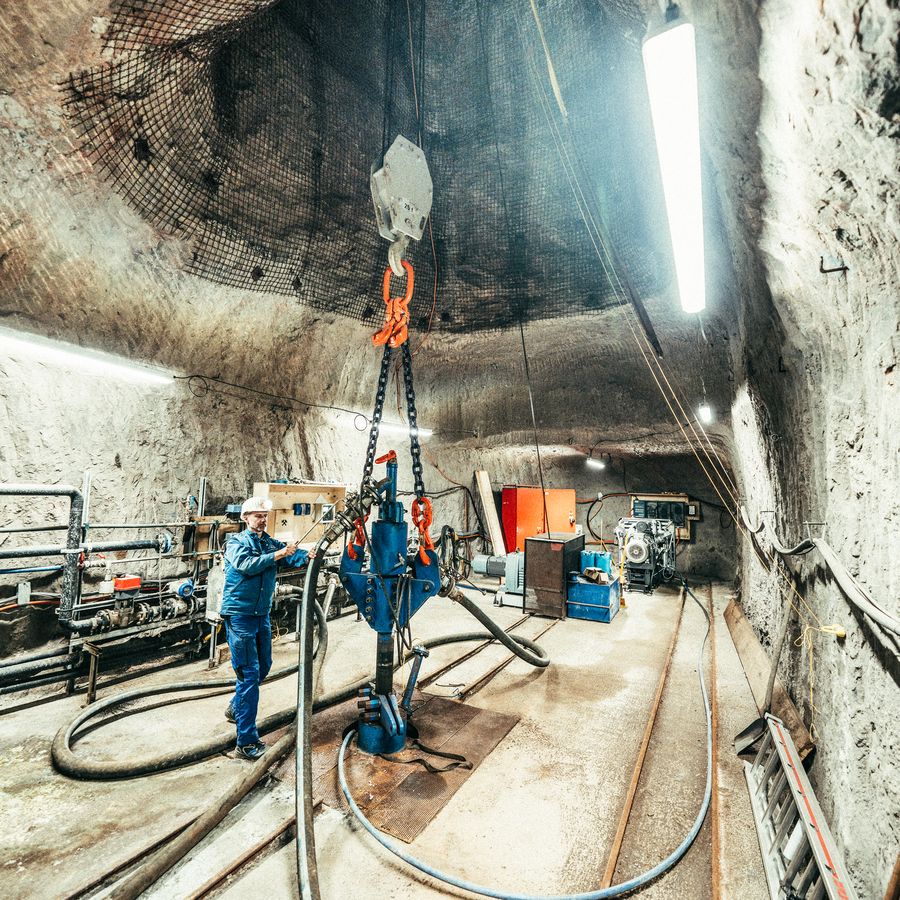
Mining sites
Mining Authority Concession
Mining is subject to the Austrian Mineral Resources Act (MinroG) and is continuously monitored by the competent mining authority. Salt is a federally owned resource in Austria: The salt deposits belong to the Republic of Austria, and the law allows only a single extraction licensee. This exclusive extraction right is held by Salinen Austria. With it, we assume responsibility for all mining damages that have ever occurred in Austria in connection with salt mining.
Sustainability, Safety, and Traceability
Production is certified according to ISO 9001 (Quality) and ISO 14001 (Environment). The brine extraction is based on closed brine cycles without impacting the surface landscape.
Every batch is GMP and IFS-compliant traceable, from brine extraction to delivery. Each shipment is accompanied by an analysis certificate. For supplier audits, recall inquiries, and Scope 3 evidence, batch records and proof of origin are available upon request.