
Romania. On the trail of salt.
Adrian Furnica from Salinen România talks about the salt business in Romania and surprises us with insights into the country's salt history.
The Romanian subsidiary of Salinen Austria AG started its active business in 2012, and Adrian Furnica joined Salinen România that same year.
Mr Furnica, how did you end up in the salt trade?
Actually, by accident. Before that, I worked for 15 years in sales for a weighing and packaging plant for food industry and retail products. Moving to Salinen România was a big change for me. But even after 14 years, I have not regretted this step once.
How has the Romanian subsidiary developed in recent years?
Our team has consisted of three employees since 2012: Daniela Mai-Mihai supports me in the back office, and my colleague in sales is Marton Szabo.
Steady growth over the last 14 years has taken us to the top of the evaporated salt segment: today we are the market leader. A decisive factor in this development is that we have two warehouses – in Bucharest and Timișoara. This allows us not only to supply the Romanian market, but also to export salt to Bulgaria, Greece and the Republic of Moldova. In the last financial year, we sold 21,000 tonnes of salt.
Who are the largest salt buyers in Romania?
They are Unilever and CDI Distribution Grup, the latter being one of the most important distributors of salt tablets in Romania. Not only international groups (such as Dr. Oetker, Heineken, Intersnack, Solina etc.) but also local companies (Caroli, CrisTim, Darimex, Ion Mos etc.) are among our important customers – in total, we supply more than 300 customers from a wide range of industries.
Where do we stand in terms of price with our evaporated salt in Romania, and what does the rest of the salt market look like?
From the very beginning, exceptional service and the highest quality have meant that our prices are above the usual national level, even though competition is very strong. Romania itself has very large salt reserves. The national salt company Salrom, for example, is one of the largest rock salt producers, with seven mines. There are also a number of private salt producers that have broken the state rock salt monopoly. Sea salt is mainly imported from Greece and Turkey. Sarerom has now also established itself in the evaporated salt business.
How would you describe the typical Romanian salt customer?
The typical Salinen România customer wants a high-quality product without fluctuations in quality. And they attach great importance to our efficient service.
Can you give us a brief insight into Romania's salt history?
Archaeological traces of salt extraction go back some 8,000 years – which means the oldest evidence of salt extraction by humans has been found on Romanian soil. The archaeological finds from Lunca and Țolici in the Subcarpathian region of Moldavia document how humans discovered salt: around 6000 BC, people's way of life changed, and with it came the growing importance of salt – flavour, preservation and livestock farming eventually made salt indispensable. In Țolici, finds from the period 6000 to 3500 BC indicate that every summer people evaporated large quantities of salt water. To do this, they developed their own system of fired clay channels. Small salt moulds were also found, which were probably used as part of ceremonies or as valuable gifts.
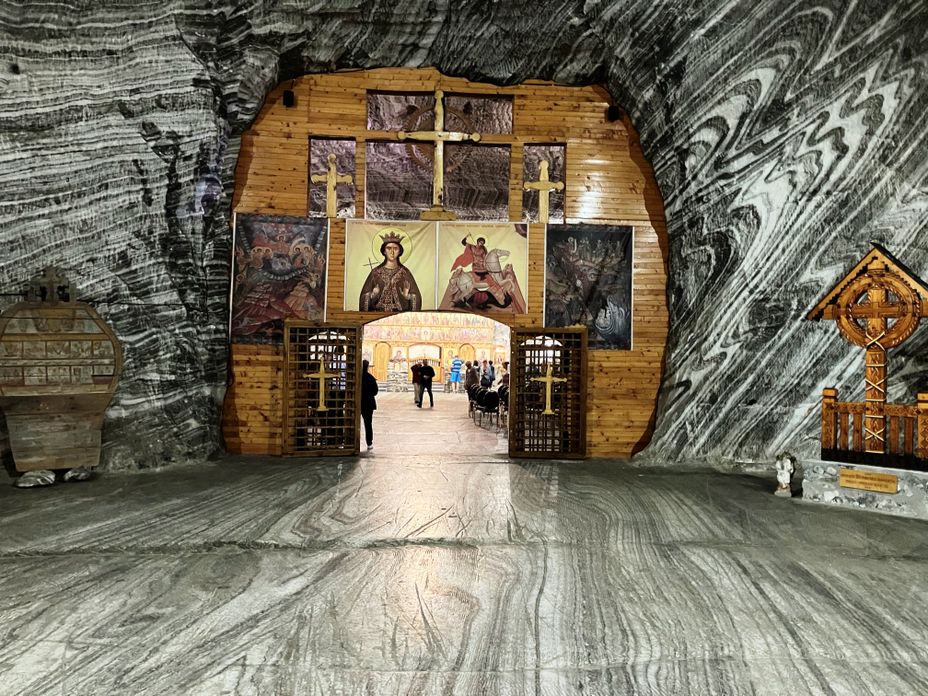
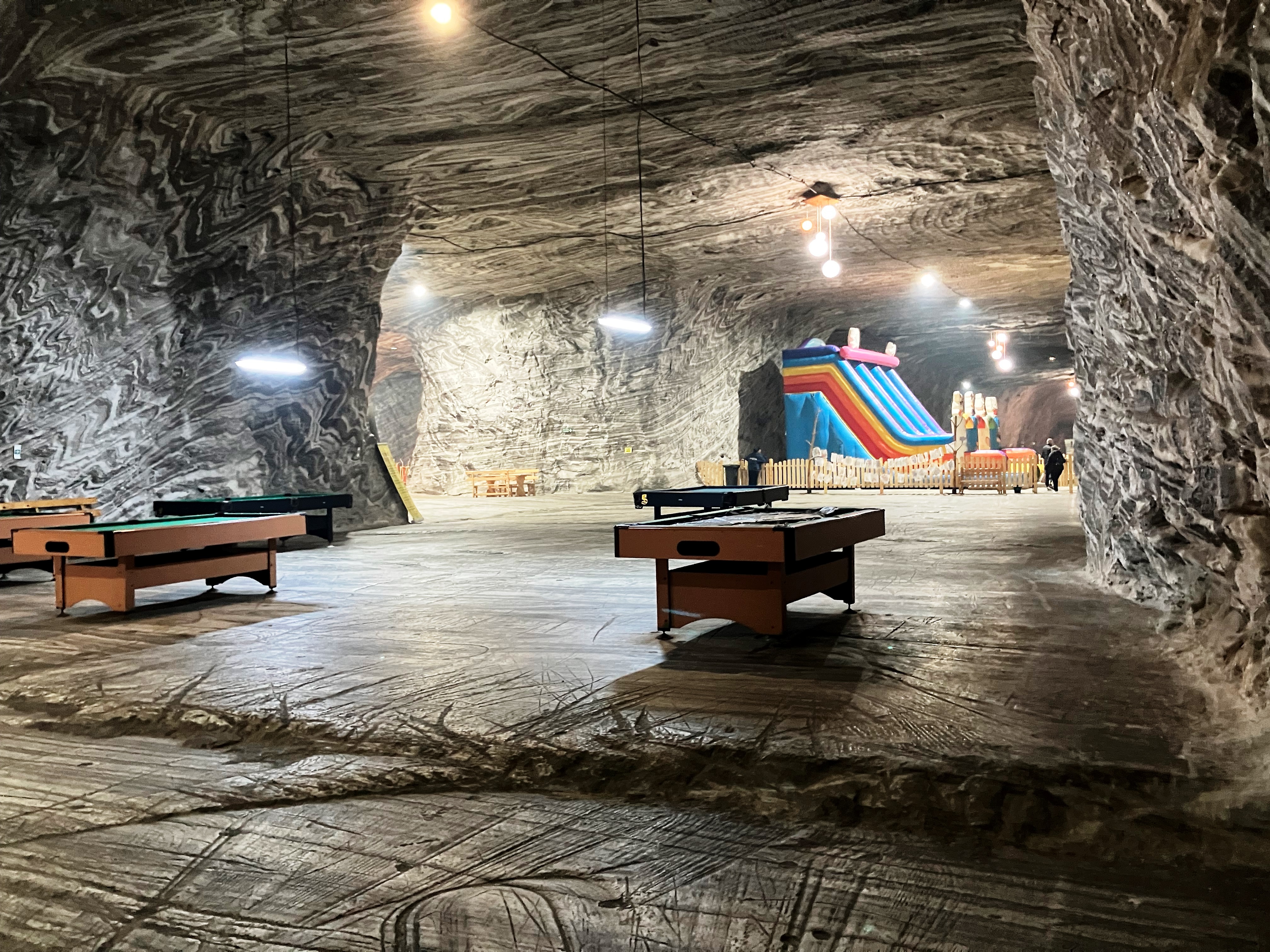
In Băile Figa, traces of industrial salt extraction also go back around 3,000 years, to the Bronze Age. Archaeologists recovered wooden installations that were still intact, large troughs, ladles, shovels, sledgehammers cut from tree trunks, wooden vessels and massive stone mining hammers. But in Romania, too, disused tunnels are being creatively repurposed, as the picture shows: it depicts the former salt mine in Ocnele Mari, a small town in Wallachia. (The cover image also shows a chapel in the same mine.)
Salt has also left its mark on customs. It was regarded as the essence and source of life and thus as divine, like gold, amber and silver. The high status of salt is also reflected in field, place and river names: Ocna Mureș, Ocna Sibiului, Râmnicu Sărat, Sărata and Slănic.
Are there customs and traditions around salt in Romania?
Of course. Even in pre-Christian times, salt was used in rituals or as an offering in what is now Romania. Salt and bread or grains of wheat symbolised wealth, which is why salt was worth its weight in gold in antiquity. For thousands of years it was one of the most expensive trade goods.
For Romanians, salt – especially sharing salt together – is a symbol of hospitality and deep connection. It is used in customs surrounding weddings or the birth of a child and stands for protection and well-being. Salt also has a firm place in Romanian superstition: if you spill salt, it heralds quarrels and misfortune. If the livestock salt is stolen, the animals are even threatened with death. The same threat applies if salt is given out of the house on a Monday.
Thank you very much for your time and the interesting insights! Finally, we would like to know: do you have a personal motto?
We don't conclude purchase contracts – we begin long-term business relationships.