
Getting to the bottom of things
NaCl is the abbreviation for the substance around which everything revolves at the Ebensee saltworks. It stands for sodium chloride, the best-known salt in the world. Birgit Spreitz and her laboratory team make sure the chemistry at the saltworks is right.
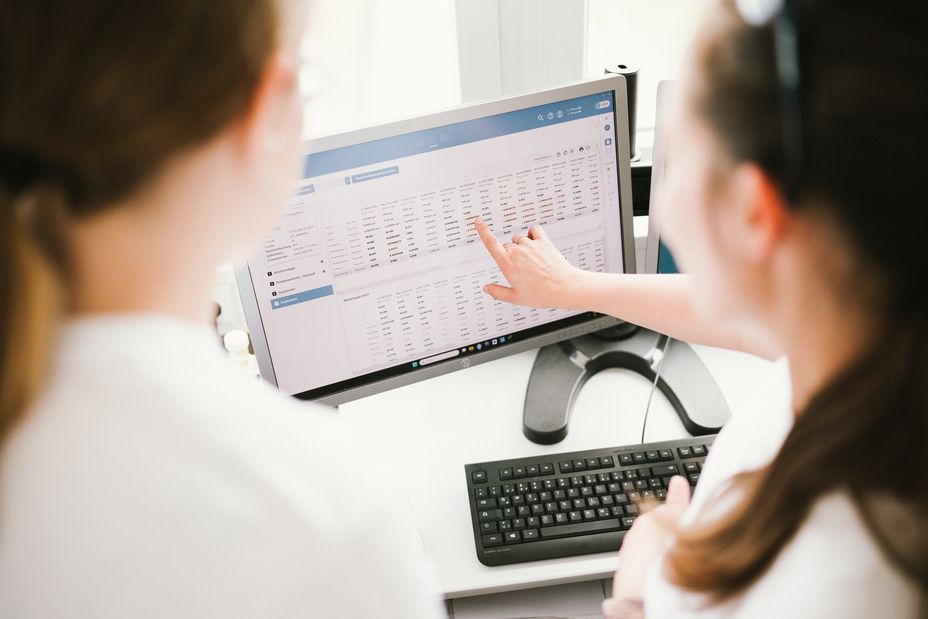
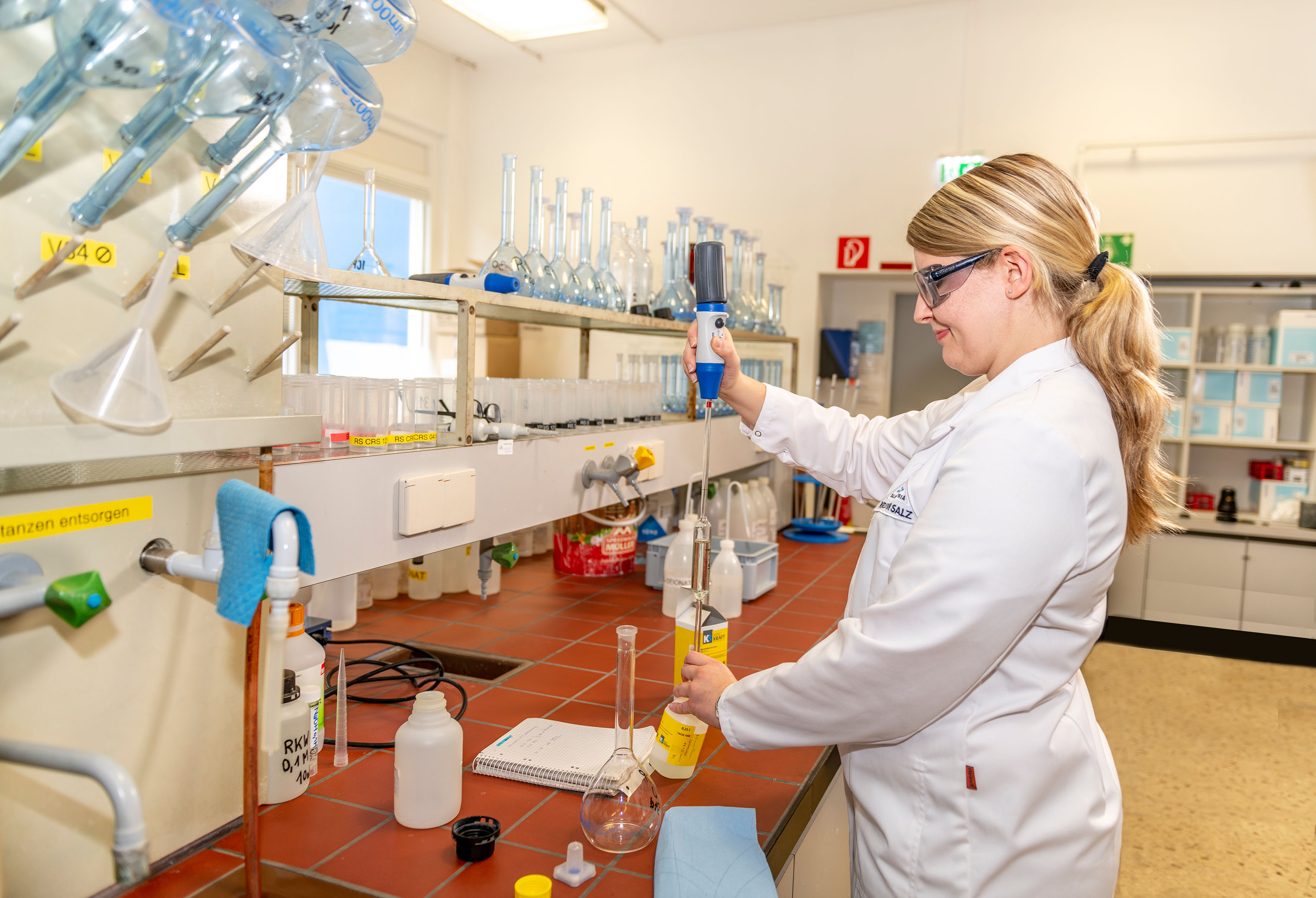
White coat, goggles, a test tube in hand: anyone who pictures this when they think of a “lab technician” is only grasping a fraction of the everyday tasks in the saltworks laboratory. Time for a reality check!
The chemistry of the mountain
The laboratory team at Salinen Austria AG accompanies the salt's entire journey with its analyses. The focus is on product quality.
It all starts with the mountain: the drill cores from exploratory drilling are examined for their sodium chloride content. This is necessary because the salt rock from the Salzkammergut does not consist of one hundred percent salt. Miners and geologists search for the rich salt deposits that promise the highest yield. The laboratory helps with precise analyses.
From brine to salt
At the Ebensee saltworks, the purest evaporated salt is produced from brine. To extract the brine, water is pumped into a cavern, where it leaches out the salt. The chemical laboratory technicians analyse the raw brine for its density, sodium chloride content and secondary salts such as potassium and sulphate. The laboratory reports to the mining department how much salt each borehole yields and whether it is already “grädig”, i.e. salty enough.
The laboratory receives samples every day from the cementation plant in Bad Ischl, where all the brine pipelines converge and the combined brine flows on to Ebensee. For salt production, it is important to know whether the ratio of water to salt is right. In Ebensee, the brine, which still contains all kinds of minerals and secondary salts, is purified. Lime is added in the first stage and soda in the second. With every delivery, plant operators in primary production check whether the quality is right and take a retention sample. The employees were trained by the laboratory for tasks like these. “We work closely with various departments because we accompany the entire process,” explains Birgit Spreitz. After the raw brine, lime and soda, the purified brine is analysed three times a day to see whether it is already pure enough. It could still contain too much calcium or magnesium. The mother liquor needed for potassium sulphate production is also checked in primary production.
Quality all along the line
The next samples are taken from the finished product: salt. Does it contain enough sodium chloride, how much secondary salt is in it, has there been any contamination? Salinen Austria AG guarantees the highest purity. Table salt consists of at least 99.6 percent sodium chloride; de-icing, tablet or pharmaceutical salt of up to one hundred percent.
To determine the grain size distribution, the laboratory staff sieve the salt. The iodine and fluorine content of table salt, the sodium nitrite in curing salt, the purity, grain size and bulk density of potassium sulphate and the moisture content of de-icing salt are also examined closely.
The laboratory staff cover the longest distance through the plant when checking waste water at the Traun. The waste water, treated in accordance with the official permit, is continuously monitored online via a probe. Maintenance and sampling are on the agenda once a week – a pleasant or less pleasant job depending on the weather.
What appeals to laboratory manager Spreitz about chemistry is that it is something everyone needs: “It's great to be able to analyse something and get to the bottom of things. Chemical laboratory technician is a great profession. Our work is incredibly varied.”