
A delicate touch required
Raw brine becomes pure salt: the employees in primary production turn the treasure of the Alps into white gold.
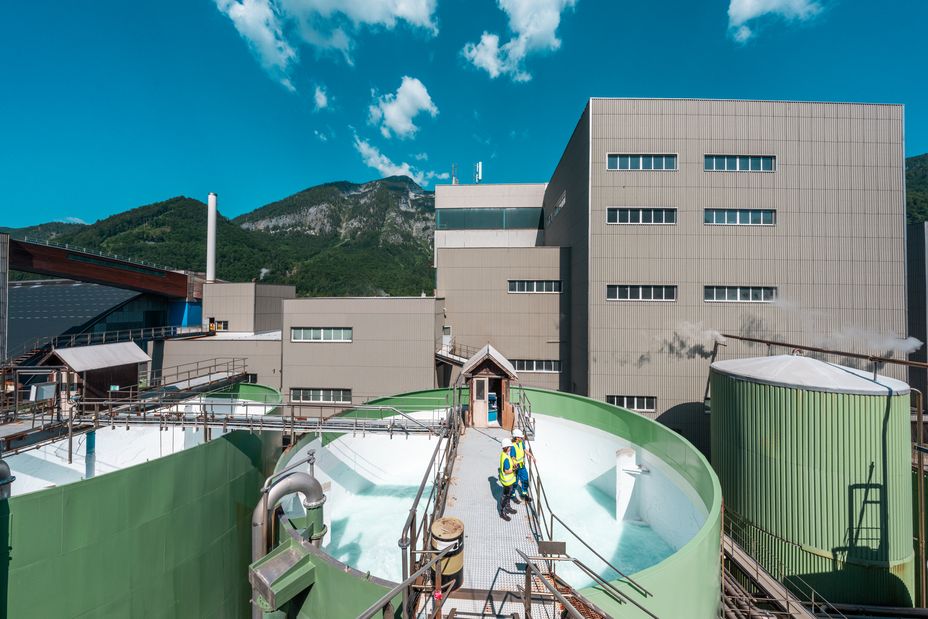
The brine extracted in Altaussee, Hallstatt and Bad Ischl travels more than 40 kilometres before it is processed into pure salt at the Ebensee saltworks. Via two pipelines – the route follows the world's oldest pipeline, built in 1595 – around 500 m3 of raw brine now reach the saltworks every hour.
Every beginning is pure
The journey from brine to salt begins with brine softening. The purification stage gives you a good first impression of what it's all about. Most employees in primary production start here.
The brine is treated in primary production. The employees carry out analyses and control the processes so that clean brine enters the evaporators. In a two-stage process, hardness-forming substances such as magnesium, calcium and sulphates are removed from the raw brine by adding lime and soda. This is necessary not only to prevent the evaporators from becoming encrusted, but also to meet the required quality criteria for evaporated salt.
What remains is a sodium chloride solution, which is heated to over 120 degrees Celsius for the thermocompression process. As it heats up, the water evaporates so that sodium chloride crystallises. The salt crystals are drawn off from the evaporators to the centrifuges and dried to a residual moisture of around 1.5 to 2.5 percent. Dry salt is then produced in the fluidised bed dryers.
One third of the quantity produced goes directly to the storage hall via a conveyor belt, from where it is transported to customers by rail or truck as loose de-icing and industrial salt. The remaining two thirds go to final production for further processing and packaging.
The mother liquor produced during evaporated salt production is used to make a special salt: potassium sulphate. Suitable as a plant fertiliser and for industrial applications, this potassium salt of sulphuric acid has developed into one of the saltworks' premium products. The reason is the exceptional purity that gives Solu K 52 and Solu K Premium their edge on the market.
Keeping an eye on quality
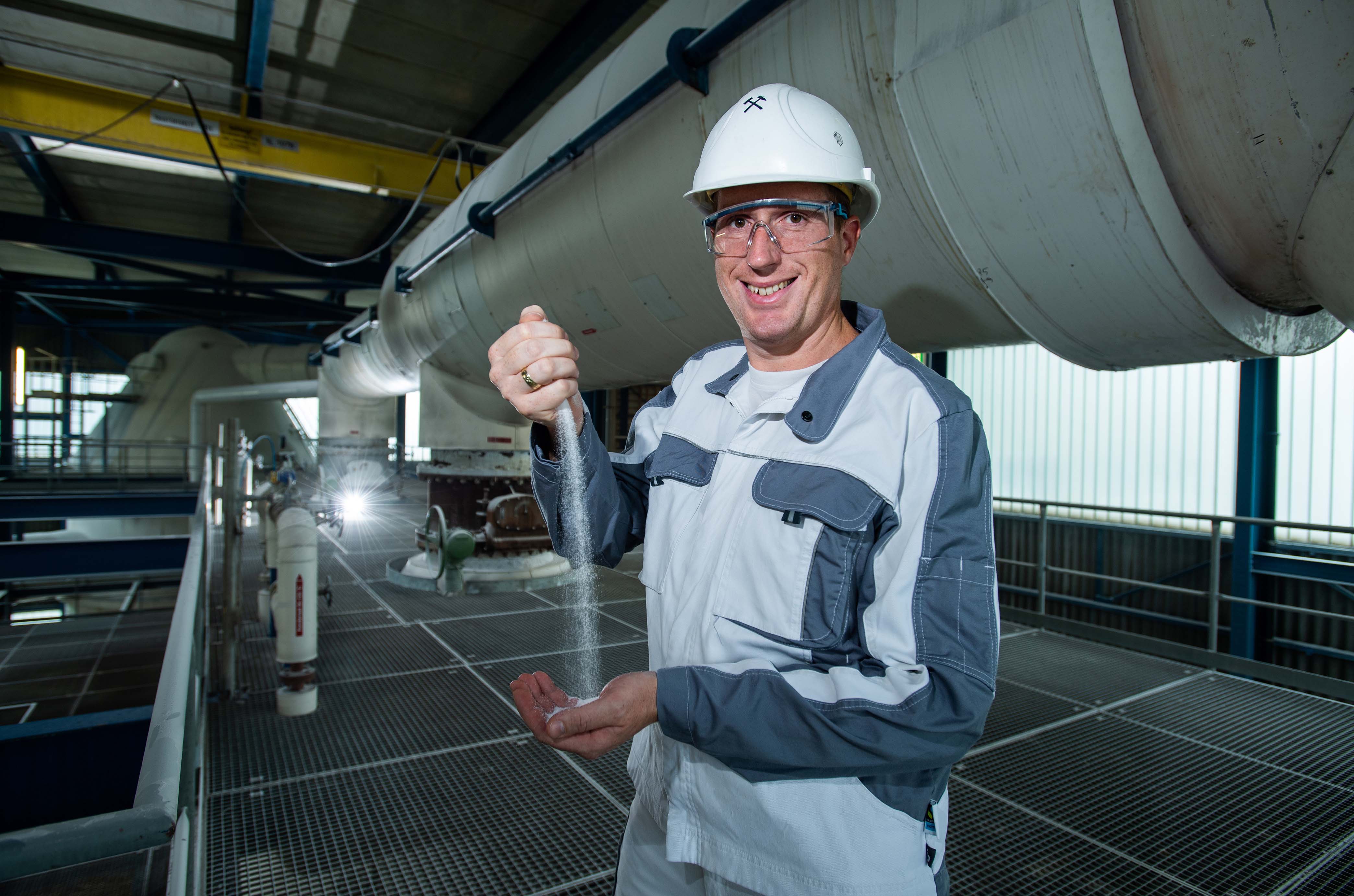
Continuous chemical process monitoring is the main task of Manfred Höller and his colleagues.
When the saltworks began operating at the Steinkogel site in 1979, 450,000 tonnes of salt were produced. Almost 50 years later, up to 1.2 million tonnes of evaporated salt and several thousand tonnes of potassium sulphate are extracted from the brine – pure white salt that remains the source of Salinen Austria AG to this day.